Category: Post-operative recovery and normal symptoms
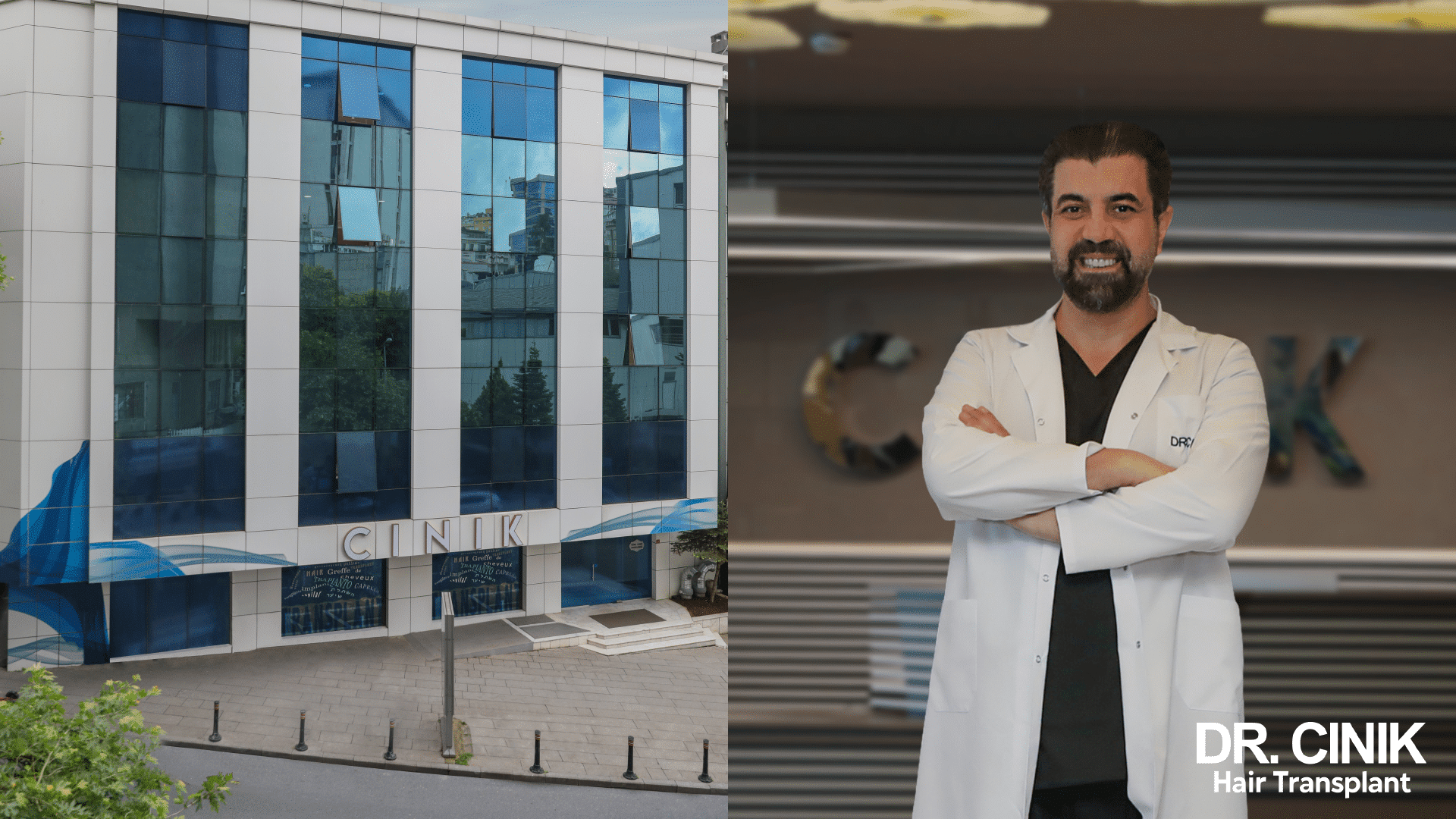
Yes, and it is more common than you would think. A little itching with small pimples that come and go is part of the late healing phase, when your new follicles are waking up at their own pace and the scalp is still settling. Start using a dermaroller to bring blood flow back and calm those small breakouts, keep washing gently every day, and whatever you do, do not scratch with your nails. If one pimple turns big, red and tender, send us a photo. We explain it all here: pimples after a hair transplant.
Category: Post-operative recovery and normal symptoms
Not at all, this is exactly what we expect in the first few days. A red, warm scalp simply means your body is sending extra blood to the area to heal it. It calms down within the first week. Drink plenty of water and rest with your head propped up.
Category: Post-operative recovery and normal symptoms
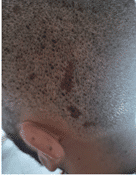
No. Small bruises in the donor area, behind the ear or around the temple, are a normal part of healing: a few tiny vessels were nicked when the grafts were removed. They clear up on their own within one to two weeks, with no treatment needed. More on the donor area.
Category: Post-operative recovery and normal symptoms
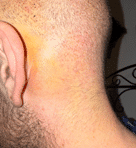
Yes. Swelling around day six is completely normal and usually lasts about a week: it is just your body reacting to the procedure. Take ibuprofen if you are uncomfortable, and sleep with your head raised on two pillows so it drains away faster. Full details here: swelling after a hair transplant.
Category: Post-operative recovery and normal symptoms
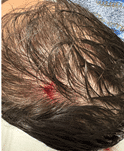
By four months your grafts are safe, but the skin can still be a touch fragile, so try to resist scratching. Start dermaroller sessions to toughen up the scalp, and talk to us about adding finasteride or saw palmetto to protect both the grafts and your own hair. And again: no nails.
Category: Post-operative recovery and normal symptoms
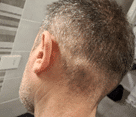
A reactive lymph node like this usually just means the scalp is a little irritated in that spot. Keep up the good hygiene and start a dermaroller at 0.5 mm, three times a week, to get the circulation going and calm the irritation. If it is still swollen after two to three weeks, come back to us so we can take a look.
Category: Post-operative recovery and normal symptoms
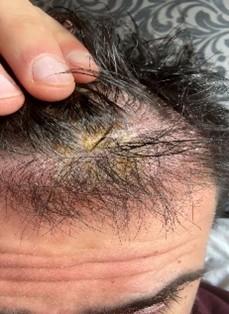
They can be. Your scalp looks very oily, so wash it thoroughly and regularly to lift the build-up. And because you have had psoriasis, the stress of surgery can sometimes set off flaking in skin that is prone to it. Send us a short video so we can see how pronounced it is and tell you whether a medicated shampoo would help. See also crusts and scabs after a hair transplant.
Category: Medication and resuming treatments
Give it about a month after your operation. That window lets the grafts settle in firmly and the first phase of healing settle down. Before you restart, just check with the doctor who prescribed them that your recovery is on track.
Category: Medication and resuming treatments
Absolutely, ibuprofen is fine, and it has the added benefit of easing any swelling that is left. Take it with food to protect your stomach and stay within the usual adult dose.
Category: Medication and resuming treatments
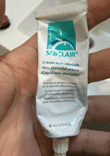
Two to three times a week is the sweet spot. Any more and you risk irritating a scalp that is still healing. Apply the cream gently with your fingertips, without rubbing.
Category: Cleaning products and local care
In the early days, please stick with sterile saline unless we have signed off on something else. A lot of products contain alcohol, preservatives or active ingredients that can sting the scalp or put your grafts at risk. Send us the exact name first and we will tell you whether it is safe.
Category: Trauma and accidents
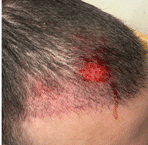
First, clean it gently with sterile saline twice a day and cover it with a non-stick sterile dressing, never with unwashed hands. Then get in touch with the clinic straight away so we can make sure the grafts are safe and rule out infection. Once the wound has closed, a short course of finasteride or saw palmetto will help the area recover.
Category: Trauma and accidents
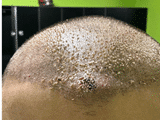
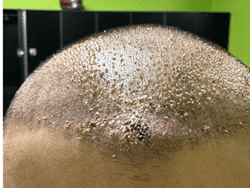
A little swelling can linger, but by day eleven we want to be sure there is no infection developing. Please start Augmentin 1 g as a protective antibiotic and send us clear photos so we can keep a close eye on you. Here is what to watch for: infection after a hair transplant.
Category: Pre-existing medical conditions and eligibility
Yes, provided we put the right precautions in place. You will need to be seen again by your cardiologist just before surgery, with an echocardiogram and a written go-ahead specifically for a hair transplant. On the day, we keep adrenaline to a minimum or leave it out altogether, give the anaesthetic slowly and carefully, and monitor you throughout (blood pressure, heart rate, oxygen, breathing), ideally with sedation overseen by an anaesthetist. So the answer is yes, but only once both your cardiologist and the anaesthetist have cleared you in writing.
Category: Pre-existing medical conditions and eligibility
If it is well controlled, it is not a problem. We will want recent readings and a quick clearance from your doctor. Uncontrolled pressure raises the risk of bleeding during surgery, so we get it stable first and keep an eye on it the whole time. Carry on with your medication as prescribed.
Category: Pre-existing medical conditions and eligibility
None of this rules out a transplant. What matters is that both are stable: thyroid levels in range and diabetes well controlled, with a steady HbA1c. Those medicines are generally fine to keep taking. We will liaise with your endocrinologist and may ask for recent thyroid and fasting glucose results before we book you in.
Category: Pre-existing medical conditions and eligibility
No, the medication itself is not the issue. What counts is that your thyroid is stable and well managed. With balanced hormone levels and a green light from your endocrinologist, you are clear to proceed.
Category: Pre-existing medical conditions and eligibility
Aspirin thins the blood, which means more bleeding during surgery, so it usually needs to be paused beforehand. How long for depends on your dose and why you take it. Never stop it on your own: we will agree a safe pause with the doctor who prescribed it.
Category: Pre-existing medical conditions and eligibility
Only after a proper cardiac work-up. We will ask for written clearance from your cardiologist, including a recent ECG (and a Holter recording if needed) confirming that your rhythm is steady. With that in hand, we operate with continuous heart monitoring and an anaesthetist in the room.
Category: Pre-existing medical conditions and eligibility
Yes, it is. A transplant is perfectly possible when your condition is well controlled, with a healthy CD4 count and an undetectable or very low viral load. We follow strict hygiene precautions with every single patient. We will simply ask for clearance from your specialist and recent blood work before scheduling.
Category: Pre-existing medical conditions and eligibility
Usually not. Extrasystoles are most often harmless, especially at your age. As long as your cardiologist has ruled out an underlying heart problem, a hair transplant is generally safe. We ask for a pre-operative ECG and a clearance, and we watch your heart rhythm during surgery.
Category: Pre-existing medical conditions and eligibility
No. Most modern antihistamines have no effect on healing. The non-drowsy ones, like cetirizine or loratadine, are safe to carry on with and can even take the edge off the itching after surgery. Keep taking your allergy medication unless we tell you otherwise.
Category: Redo procedures and failed transplants
Yes, a repair procedure is possible, but first we need to understand why the earlier ones did not work: how the grafts were handled, the aftercare, a medical reason, or simply a limited donor area. We examine your scalp and donor area under magnification to see how much donor hair you have left and whether a different technique would give you a better outcome. More here: corrective surgery after a failed hair transplant.
Category: Technique and aesthetics
Yes, and honestly that is the whole point. When you are planning a hair transplant the priority is always a natural look, and the single most important factor is the hairline design. Here is how we build yours.
We start from your old photos. First we look at your earlier pictures to see where your natural hairline used to sit, and we point out the small irregularities and asymmetries that were already there.
A hairline should never be straight. A line drawn with a ruler is a barber's aesthetic, not a natural one. The two sides are never perfectly symmetrical: there are always tiny, millimetric differences. A real hairline has both small and large ins and outs, including zigzag patterns.
We build in large and small irregularities. Along the front we create macro zigzags of 4 to 9 mm. Then, as we place the fine single grafts into the channels, we add micro irregularities down to the millimetre, so the grafts never sit on one straight row.
Only single grafts go in the front row. For this we use single, very fine grafts taken from the nape or from behind the ears. Single grafts in the first rows are exactly what prevents the dreaded "concrete wall" look.
We respect your facial asymmetry. No face is perfectly symmetrical: your eyebrows, eye sockets, temples and ears are never identical mirror images, there are always millimetric differences. So the hairline should not be perfectly symmetrical either.
In short, a natural hairline is never symmetrical or perfectly straight. The goal is not to draw a line with a ruler. We recreate the small and large irregularities, the zigzags and the slight asymmetries you were born with, so that even someone looking closely after your transplant cannot tell.
Medical disclaimer: this article is for general information only and is not medical advice. Individual results vary. For a plan suited to your case, book a consultation with Dr Cinik's medical team, qualified professionals who can assess your situation in person.